
Parapet Wall Repair in Manhattan, Ready for the Yearly Inspection
The parapet is the short wall along the edge of your roof. It takes more weather than any other part of the building, and it sits right over the sidewalk. Once the brick starts to lean or a coping stone works loose, the city expects it fixed quickly. We repair, rebuild and re-cap parapets across Manhattan, and we hand you the photos and notes your next annual observation will ask for.

What Does the NYC Parapet Inspection Require?
Since January 1, 2024, any building with a parapet facing a public sidewalk or street needs a close-up look at that parapet once a year, no matter how tall the building is. The rule comes from Local Law 126 of 2021. Detached one- and two-family homes are exempt, and so are buildings fenced off so nobody can walk below the wall. A competent person can do the check (a mason, your super, an engineer), and the report stays with you for six years rather than being filed with DOB.
The observer is looking for a wall more than one eighth of its thickness out of plumb, cracks, loose or missing brick and coping, worn-out mortar, and railings or equipment that have come loose. If anything looks unsafe, DOB has to be told right away, protection goes up, and the repair must be done within 90 days. That repair is our work. In a year your building files a FISP report, that report can cover the parapet as well, provided it includes everything the parapet rule asks for.
What a Failing Parapet Wall Looks Like
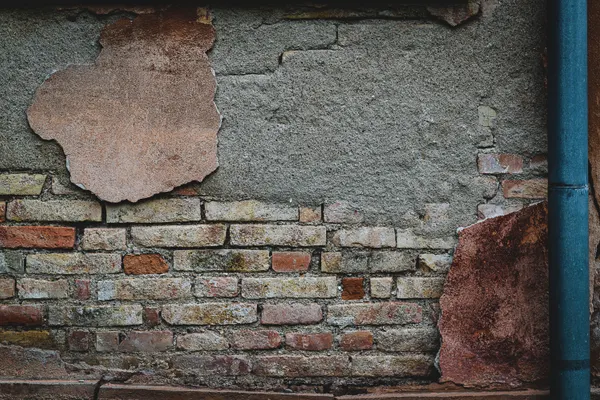
It leans: you can see it from across the street, or a level on the roof shows the top drifting toward the sidewalk.

The coping rocks: cap stones shift underfoot, the joints have opened, and a few pieces may already be gone.
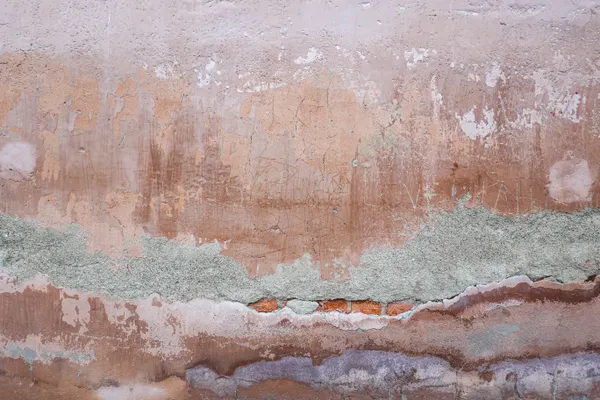
Cracks you can trace: steps through the mortar, or one straight line just under the coping where the wall is moving.

The top floor gets wet: parapet flashing has split or pulled away, so rain runs down inside the wall.
Why a Roof Parapet Wears Out Before the Rest of the Wall
A roof parapet is exposed on both faces and the top, and there is no building weight sitting on it to hold it in line. Water soaks in, freezes, and pushes the brick apart a little more each winter. Most of the parapets we open have been quietly moving for years.
- Freeze and thaw working on brick that stays wet from both sides
- Roof re-covers that buried or tore the base flashing
- Railings, antennas and signs bolted into the wall that pry it loose in high wind
How a Parapet Repair Goes, From First Look to Final Report
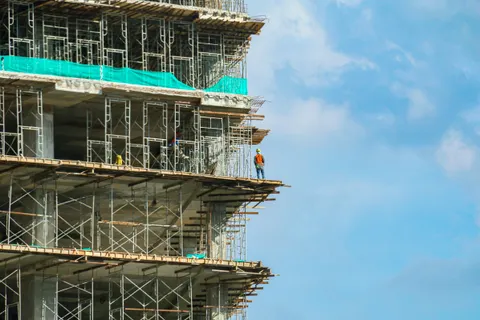
Check Plumb and Condition
We put a level on every run and photograph each face, so the starting condition is on record before anything is touched.
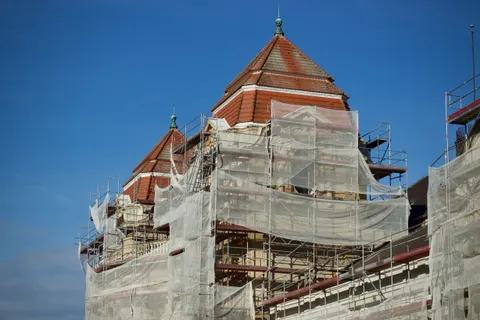
Make the Edge Safe
A section that could fall is braced, netted or taken down that day, and DOB is notified when the rule calls for it.
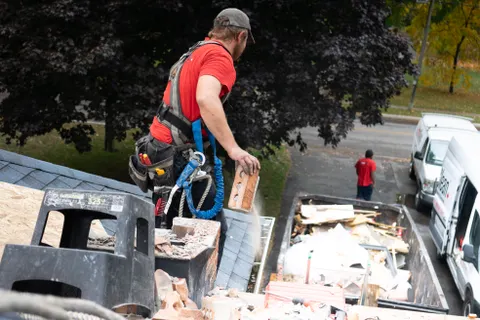
Take Down What Has Moved
Loose or leaning brick comes off course by course, and sound units are cleaned and set aside for reuse.
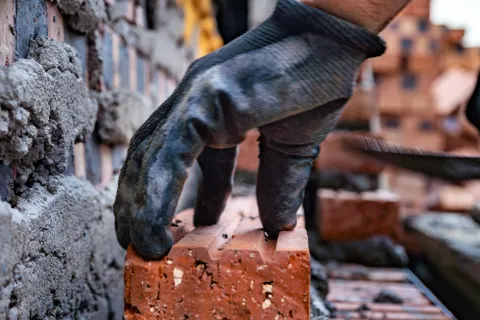
Rebuild and Re-Cap
The wall goes back in a mortar suited to the old brick, tied in where needed, and topped with sloped coping on fresh joints.

Flash It and Write It Up
Base and cap flashing are tied into the roof, and you get dated photos and notes for the next annual observation.
Repoint, Rebuild or Re-Cap: Picking the Right Parapet Fix
How far the wall has moved decides most of this. The rest depends on where the water is getting in.
Repointing and Spot Repairs
If the wall stands straight and only the joints are worn, raking out and repointing, plus a few new bricks, is usually enough.
Partial or Full Rebuild
Once the lean passes the one eighth limit, patching will not hold. The moved courses come down and go back up straight.
New Coping or Parapet Wall Cap
Stone, cast stone or metal caps with a drip edge keep rain off the wall, and sealed joints stop water sitting on top.
Temporary Bracing
Steel bracing or netting holds a dangerous section in place while drawings, permits or materials catch up.
When the Parapet Hides Behind a Cornice
On many older buildings the parapet sits right behind the cornice, so the cornice has to be opened or partly removed before anyone can reach the brick. We plan both jobs together. If the building is a landmark, rebuilding a street-facing parapet also needs LPC approval for the brick, mortar and coping, which our landmark facade team handles.
Keeping Water and Wind Off a Rebuilt Parapet
A new wall fails the same way as the old one if the water path and the hardware on top are left alone.
Parapet Wall Waterproofing and Flashing
Through-wall flashing under the coping and base flashing at the roof turn water back out. We tie both into the roofing so the seam between them stays closed.
Railings and Rooftop Equipment
Rails, ladders, antennas and signs are part of the yearly check too. We reset loose anchors, or move the hardware off the parapet so it stops working the wall loose.
What Moves the Price of a Parapet Job
| Factor | Why It Matters |
|---|---|
|
Length of wall |
Parapets are priced by the linear foot, so a corner building with two street faces costs more. |
|
Repoint or rebuild |
Repointing a plumb wall costs far less than taking down and relaying courses that have moved. |
|
Coping choice |
Reset stone, new cast stone and metal caps all differ in material and labor. |
|
Access |
Roof access, hoisting and sidewalk protection add more on tall or busy frontages. |
|
What is inside |
Rusted steel, rotted blocking or old patching found once the wall is open can add scope. |
- Observed once a year, every year
- Lean limit: one eighth of wall thickness
- Reports kept for six years
Parapet Questions We Hear From Owners and Supers
The short wall that rises above the roof at the edge of a building. It guards the roof edge, screens rooftop equipment and finishes the top of the facade. Because it sits over the sidewalk, it is the part of the wall the city now checks every year.
Any person competent to spot parapet hazards, such as a mason, bricklayer, superintendent, architect or engineer. The owner keeps the report for at least six years and shows it to DOB on request.
Once every year. The requirement started on January 1, 2024, and most owners book it well before the end of each calendar year.
DOB has to be notified right away, public protection such as a shed, fence or netting goes up, and the condition must be fixed within 90 days.
The rule flags a parapet that is out of plumb by more than one eighth of its thickness. On a 12-inch wall, that is about an inch and a half.
In a year your building files a FISP report, it can count as the parapet observation if it covers everything the parapet rule requires. In other years, a separate observation is still needed.